

A smarter solution to Australia's cladding challenge


Following major cladding fires in Australia and overseas, thousands ofapartment owners were left facing a difficult reality: their buildingscontained combustible cladding, but replacing it could cost more than $1million per building.
An RMIT research team developed a new AI-powered approach to assesscladding fire risk more accurately and identify where action would have thegreatest impact. By combining fire modelling, building design data and localweather conditions, the technology helps engineers and regulators make safer,evidence-based decisions.
The framework underpins Victoria's cladding risk management protocolsand has been applied to more than 1,250 buildings containing 63,000 apartments.It has helped deliver safer outcomes while saving more than $350 millioncompared with traditional replacement approaches.
Now helping inform a national standard, theresearch is providing Australia with a smarter way to manage building safetyand protect communities.

RMIT Research team (from left to right) Dr Rajeendra Godakandage, Dr Phuong Duy Huynh, Prof Kate Nguyen, Dr Azra Sourjah, Dr Becky Chulikavit, Dr Thomas Loh
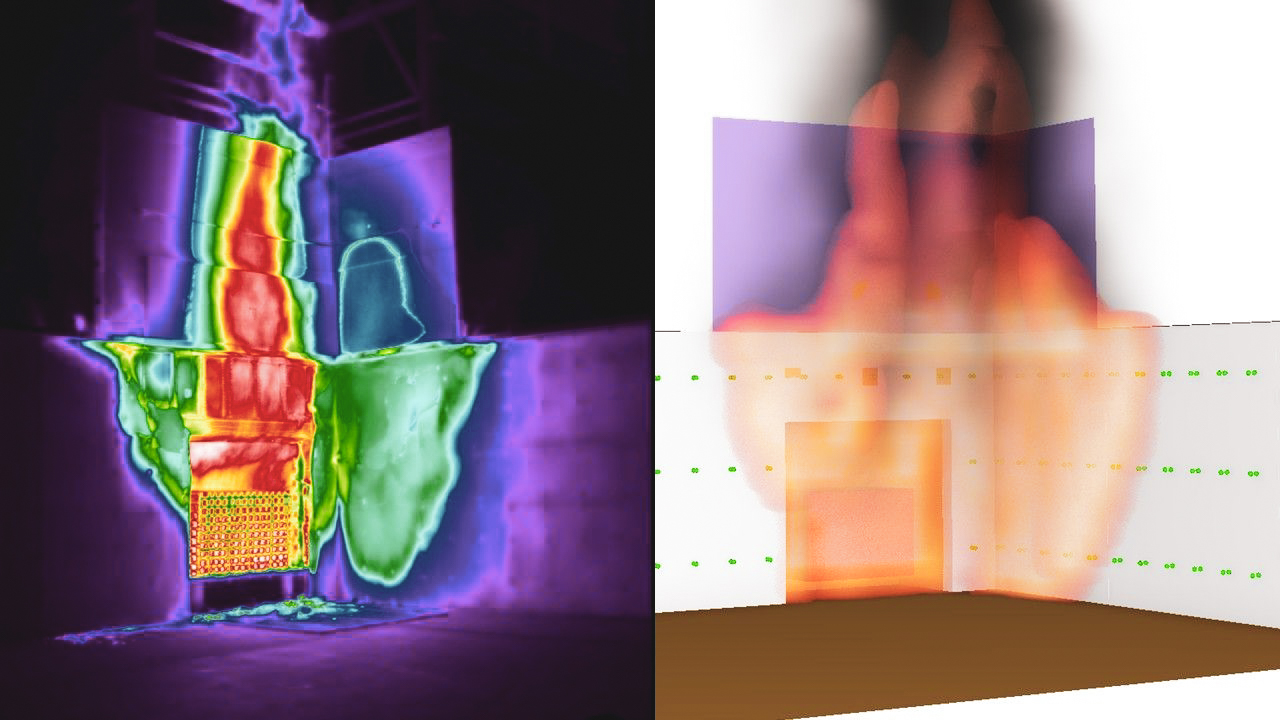
Thermal imaging (left) and fire simulation optimised by AI surrogate model (right)

Importance of wind on cladding fire: No wind (left) and with wind (right)
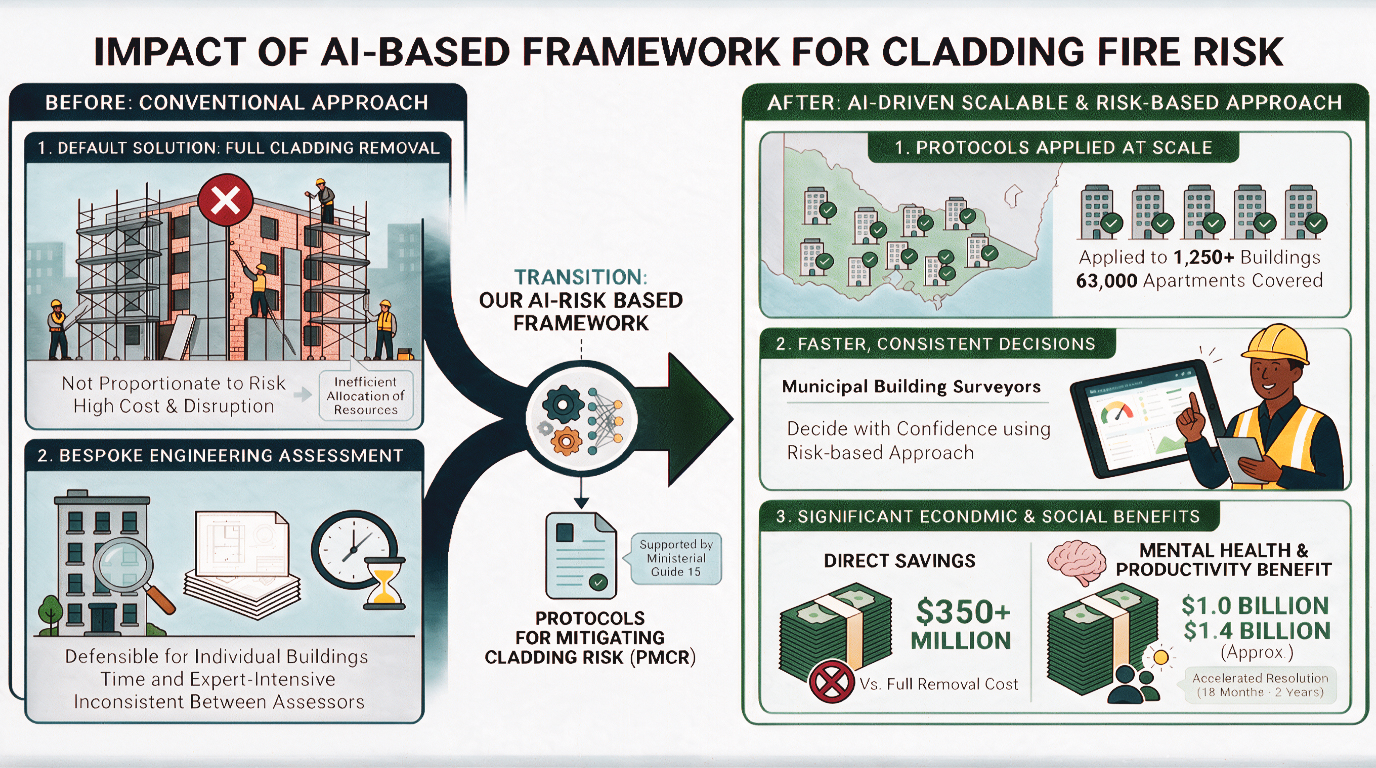
Full cladding removal, assessed one building at a time, replaced by the risk-based approach now applied to 1,250+ buildings and 63,000 apartments, saving over $350 million against conventional full removal
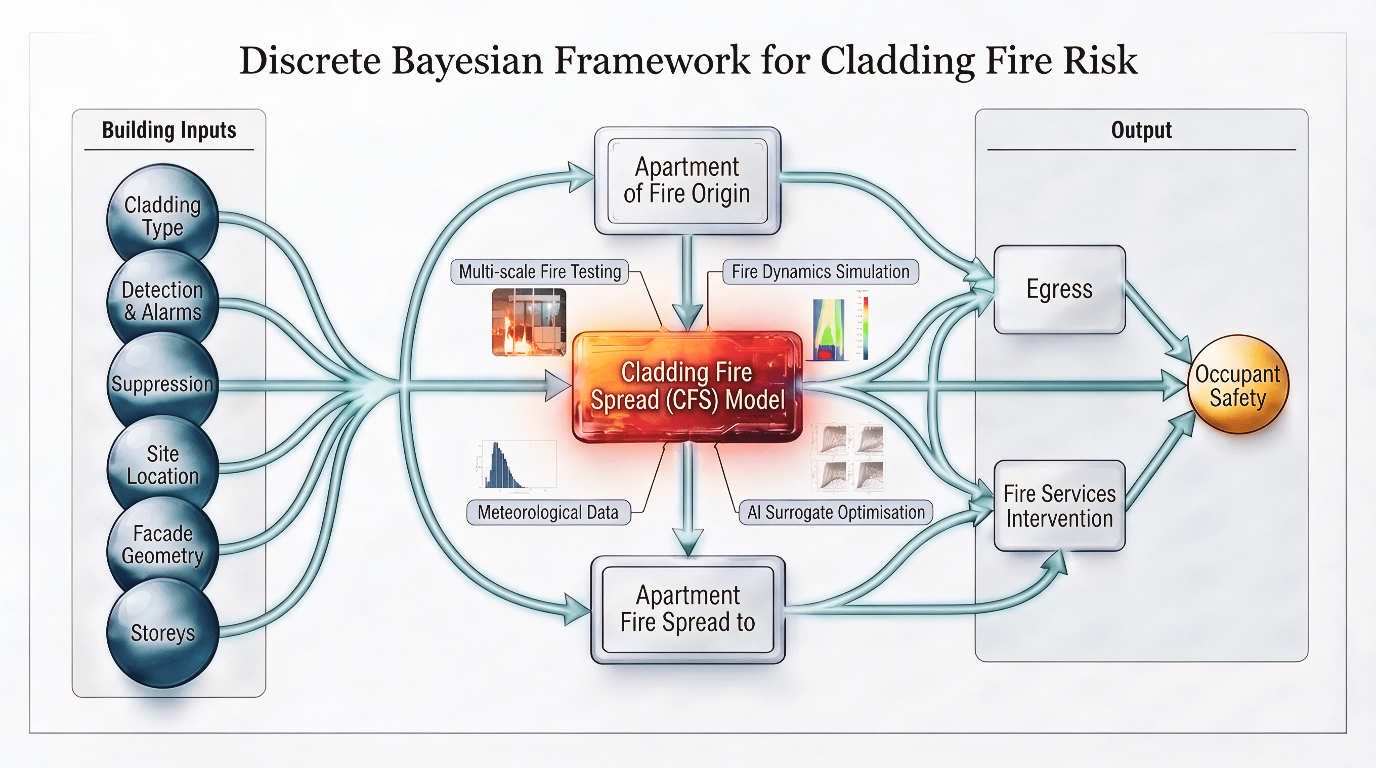
Conceptual design of AI-based risk framework

Stay informed
Receive the latest updates about the Shaping Australia Awards program.