

Australian river screens saving fish, farms and rivers


Australia's rivers support native wildlife, farming communities and afood and fibre industry worth billions of dollars. But every year, millions ofnative fish are drawn into irrigation pumps and water diversion channels,threatening already depleted fish populations.
Charles Sturt University helped develop fish-protection screens designedspecifically for Australian rivers, native fish species and irrigation systems.
Working with government, industry and farming communities, researchersdemonstrated that the screens can reduce fish losses by more than 90 per centwhile also improving water quality and reducing debris entering irrigationsystems.
Today, 45 sites across New South Wales protect an estimated 1.48 millionnative fish each year, with the potential to safeguard millions more.
By proving that healthy rivers and productiveagriculture can go hand in hand, this Australian innovation is helping secure abetter future for both regional communities and native wildlife.
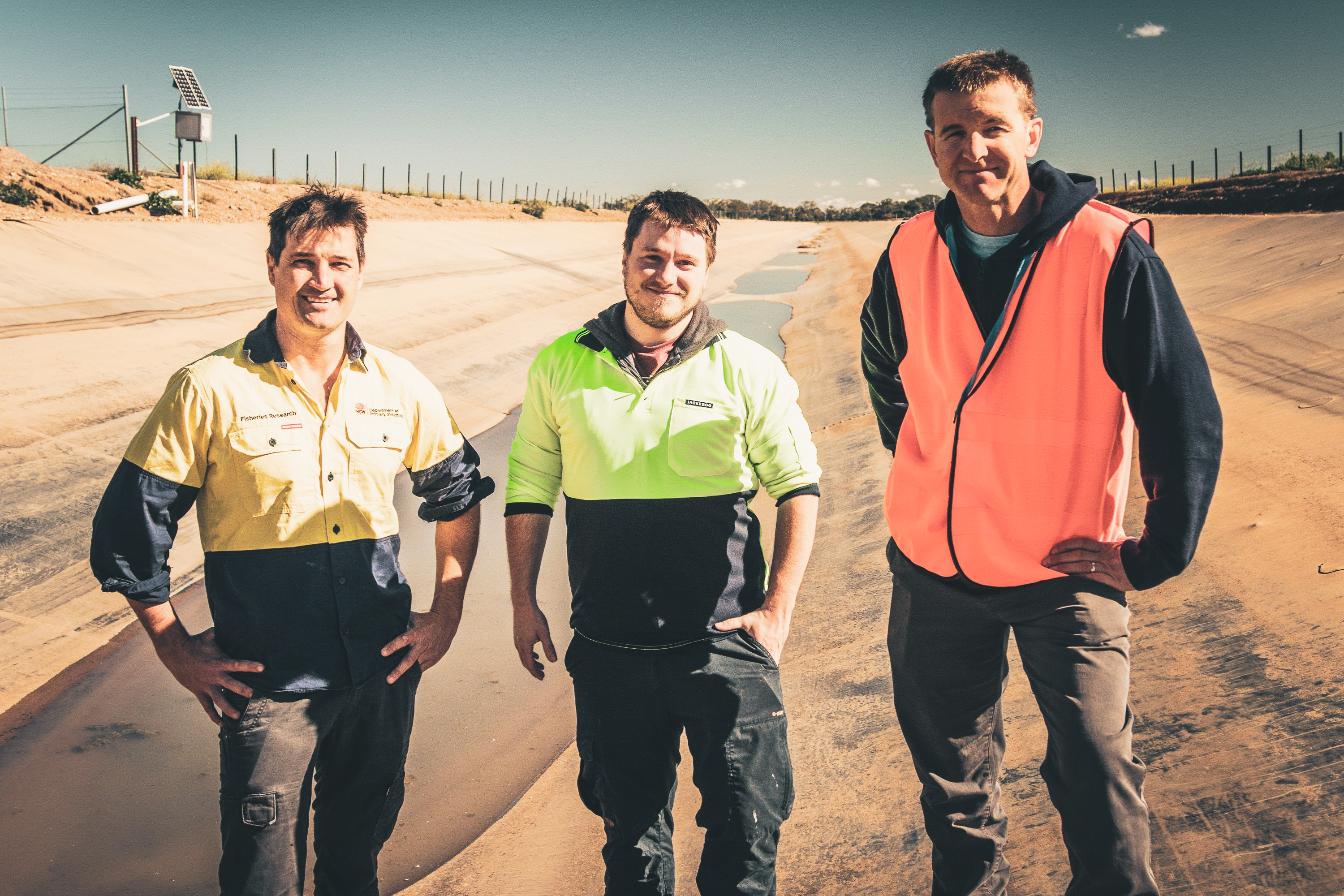
Craig, Joachim and Lee inspect the Trangie-Nevertire Irrigation Scheme site which pumps water out of the Macquarie River in Central West NSW. Pictured: Principal Fisheries Research Scientist with the Department of Primary Industries and Regional Development Dr Craig Boys, Post Doctoral Adjunct Researcher with the Charles Sturt Gulbali Institute Dr Joachim Bretzel, and Executive Director of the Charles Sturt University Gulbali Institute Professor Lee Baumgartner. Credit: Tom Rayner

Craig assesses a fish protection screen in motion. Pictured: Principal Fisheries Research Scientist with the Department of Primary Industries and Regional Development Dr Craig Boys. Credit: Joachim Bretzel

Joachim sets up netting in the irrigation channel as part of the research program. Pictured: Post Doctoral Adjunct Researcher with the Charles Sturt Gulbali Institute Dr Joachim Bretzel. Credit: Julius Bretzel

An impinged trout cod is observed at a simulated fish screen. Pictured: N/A. Credit: Joachim Bretzel

An Vu works in the flume setup at the lab in Albury where fish screening technology is tested. Pictured: Research Fellow and Vietnam Lead for the FishTech program with the Charles Sturt Gulbali Institute Dr An Vi Vu. Credit: Joachim Bretzel
AWMA Water Control Solutions has partnered with Charles Sturt University for more than a decade to develop and test fish-protection screen technology for Australian conditions.
Together with NSW Government researchers, we have invested in purpose-built research facilities at Cohuna and Charles Sturt University to test screen designs across Australian fish species and life stages. That partnership helped develop the first standardised design criteria for fish-protection screens in Australia.
For AWMA, the partnership with Charles Sturt has been enormously valuable. Having rigorous, independent science behind the technology gives industry and water users confidence that the screens we design, manufacture and install will protect native fish while continuing to reliably deliver the water farmers and communities need.
The partnership has also created significant opportunities for Australian manufacturing and innovation.
What started as research into an Australian environmental problem has contributed to projects across Australia and opportunities for AWMA in New Zealand and Southeast Asia.
This is an excellent example of a public-private-academic partnership delivering on ground outcomes.
AWMA is proud of our long association with Charles Sturt and the contribution we have made together to keeping fish in our rivers while delivering better outcomes for farmers and water users.
We wish the Charles Sturt team every success in the Shaping Australia Awards.
Brett Kelly - Managing Director. AWMA Water Control Solutions
On behalf of The Ian Potter Foundation, I am pleased to offer our support for Charles Sturt University’s submission to the Universities Australia Shaping Australia Awards.
In 2017, The Ian Potter Foundation awarded a grant of $300,000 over two years to Charles Sturt University for the project ‘Developing design guidelines for diversion screens that save native fish and enhance agricultural productivity’.
The project set out to establish design criteria and national guidelines for irrigation diversion screens to help protect native freshwater fish populations and enhance agricultural productivity. The team successfully trialled the technology, developed design guidelines and built a strong partnership between researchers, government and industry.
At the time of acquittal, we were interested in whether that early work could ultimately be translated and scaled, and we are pleased to see how far the work has progressed.
What began as an early research project has now grown into a much larger program of investment in fish screening across the Murray-Darling Basin. We are proud to have supported the work at an early stage and congratulate the Charles Sturt University team and its partners on what they have achieved.
The Ian Potter Foundation supports this nomination, and we wish Charles Sturt University every success in the Shaping Australia Awards.
Paul Conroy - Chief Executive Officer
OzFish has been involved in fish screening since our establishment because unscreened pumps cause massive losses of native fish and the problem is very solvable If we can keep those fish in the river, that is good for native fish populations, good for fishing and as it turns out good for farmers.
OzFish has been very happy to support this work because of the partnership behind it. CSU, NSW DPIRD, OzFish, screen manufacturers, the irrigation sector and the recreational fishing community have all worked together to develop a solution that actually works.
The research has shown that properly designed screens can stop more than 90 per cent of fish being lost through diversions. Farmers also save time and money with cleaner water, with less fish and other debris getting into their irrigation systems. So there is a genuine benefit on both sides. We are now seeing screens installed across the Murray-Darling Basin and hundreds of thousands of fish staying in our rivers each year as a result. That means more native fish in our rivers and better fishing.
One of the best things about this work has been seeing researchers, government, industry, irrigators and fishers working together to actually get something done.
We’ve gone from talking about millions of fish being lost through diversions to having screens in rivers preventing it from happening. That’s the sort of outcome we want to see.
OzFish is proud to have been part of that journey, and we wish Charles Sturt University all the best in the Shaping Australia Awards.
Craig Copeland - Founder/Director, OzFish Unlimited
Australian river screens saving fish, farms and rivers | Charles Sturt University
Stay informed
Receive the latest updates about the Shaping Australia Awards program.