

SignPlay: helping families learn Auslan when everyday counts


For deaf children, the early years are a critical window for language development. Yet more than 90 per cent are born to hearing parents who do not know Auslan, and many families wait for months to access lessons and support.
SignPlay was created to help families start learning sooner. Developed by the University of Sydney and Deaf Connect, the mobile app uses AI-powered sign recognition to provide instant feedback, helping parents practise Auslan confidently between lessons.
Unlike videos or flashcards that simply demonstrate signs, SignPlay can tell users whether they are signing correctly. Through short, game-based activities, families can learn at their own pace and build skills in the moments that fit around everyday life.
By extending the reach of scarce teaching resources, SignPlay is helping more deaf children access language, connection and opportunity during the years that matter most.
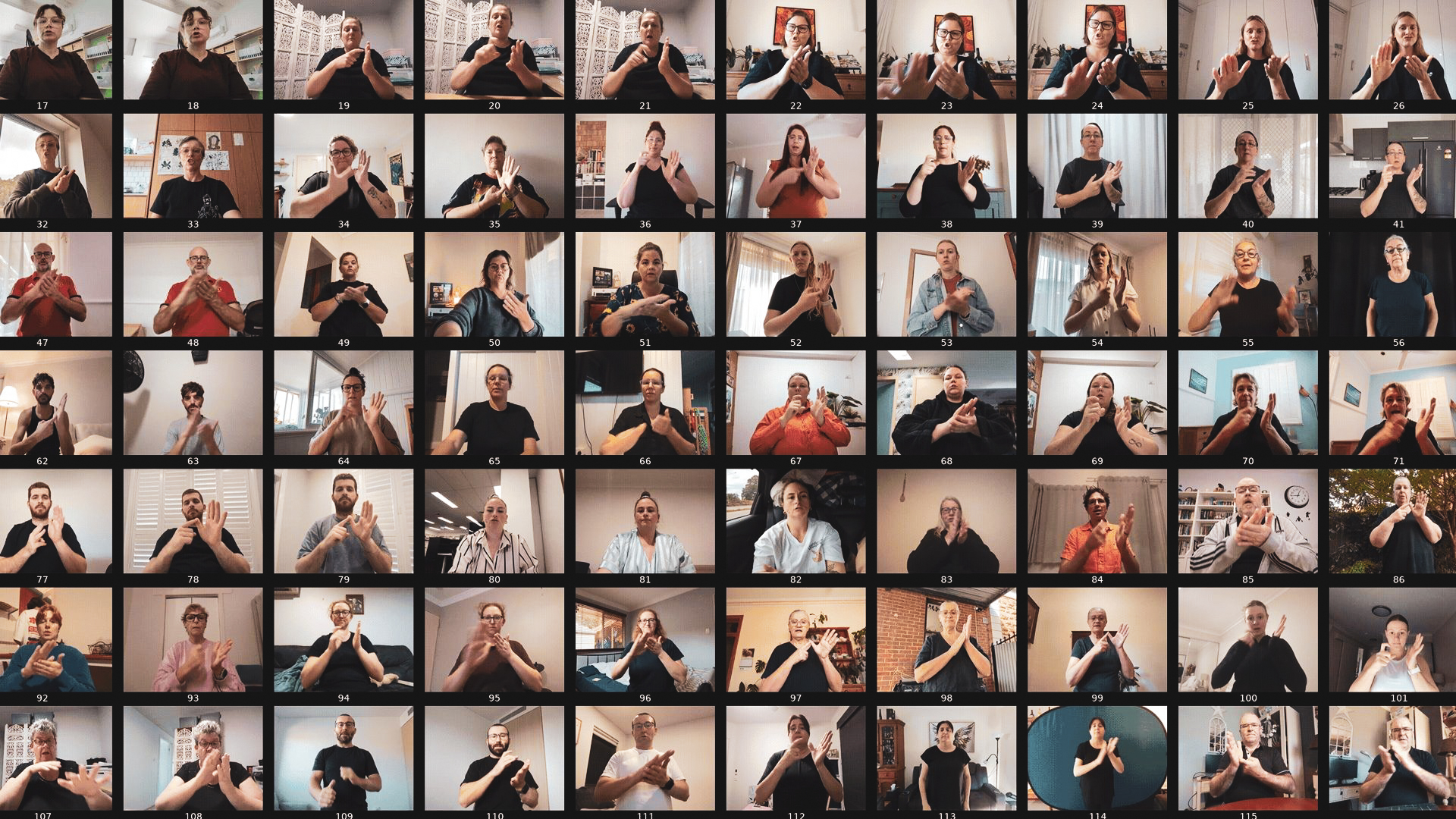
The SignPlay research platform and Auslan video dataset used to train the AI recognition model. More than 250,000 videos covering 2,000 Auslan signs were collected with members of the Deaf community, creating the largest real-world Auslan dataset assembled to support sign language learning and recognition.
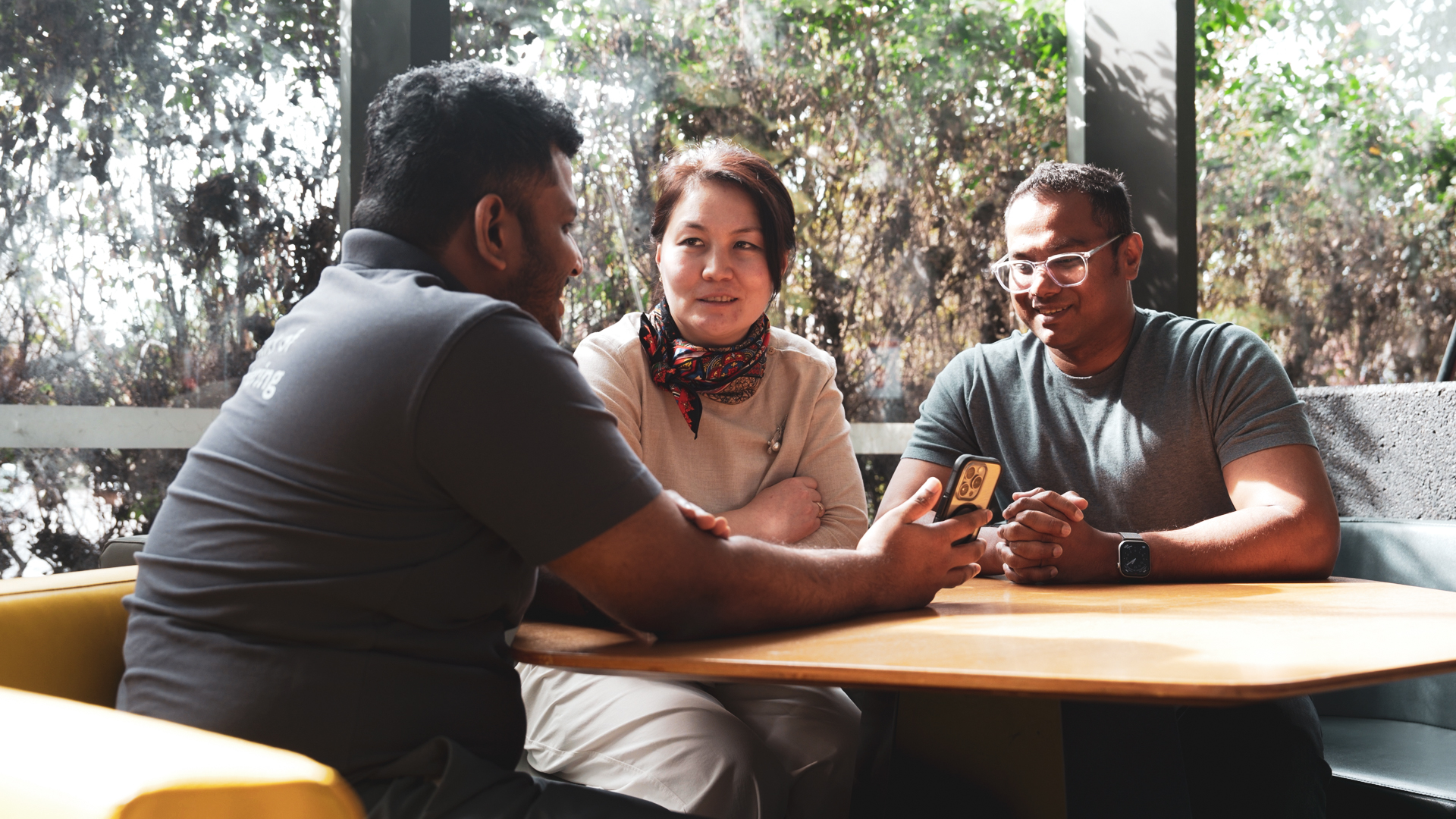
The SignPlay team working together to refine the user experience and learning activities. The platform was co-designed to make Auslan learning more accessible, engaging and effective for families learning sign language with their Deaf children. Photo credit: The University of Sydney
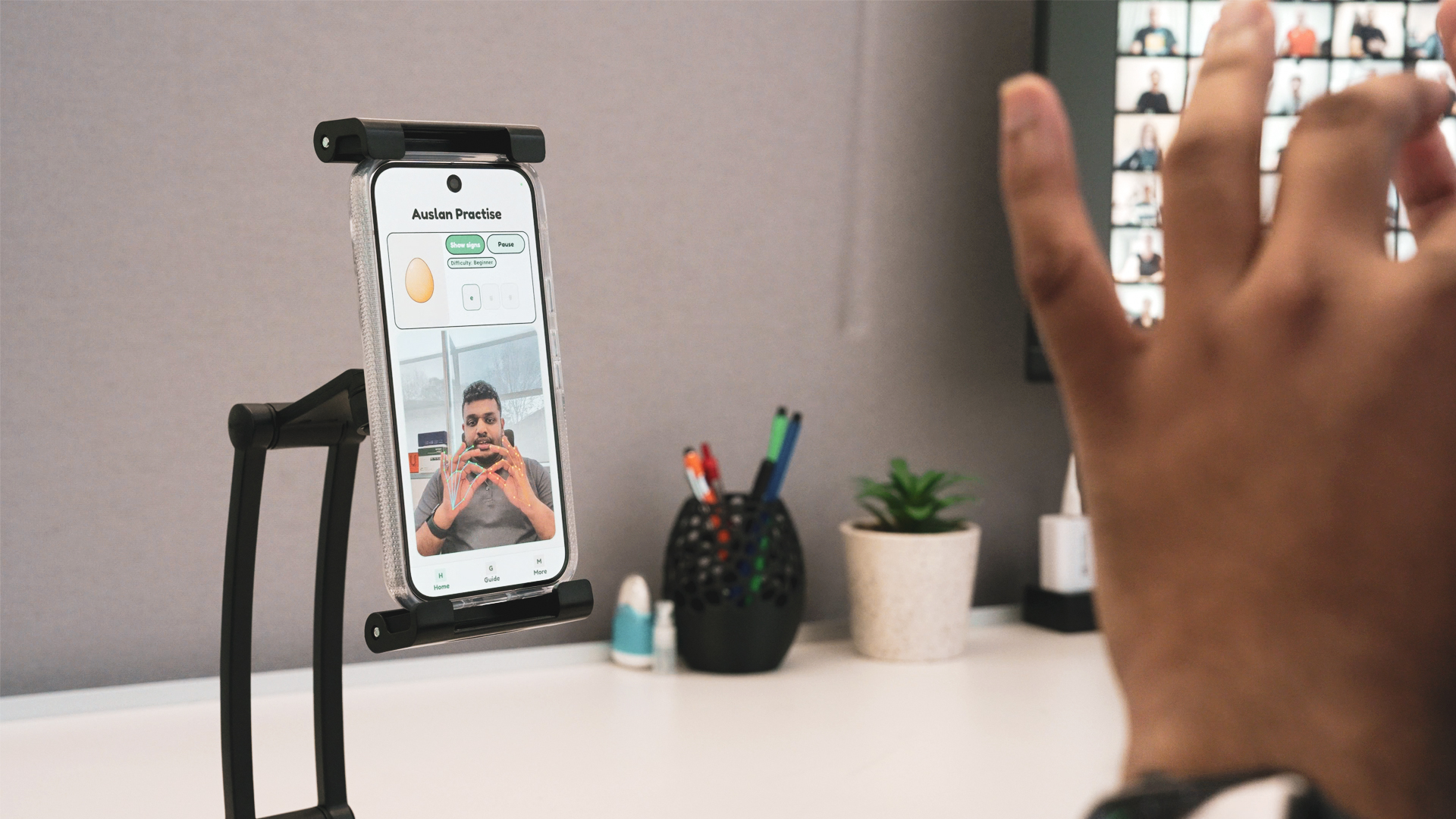
A user practises Auslan using the SignPlay mobile platform. By providing immediate feedback through AI-powered sign recognition, SignPlay helps families build confidence in their signing and continue learning between formal lessons.
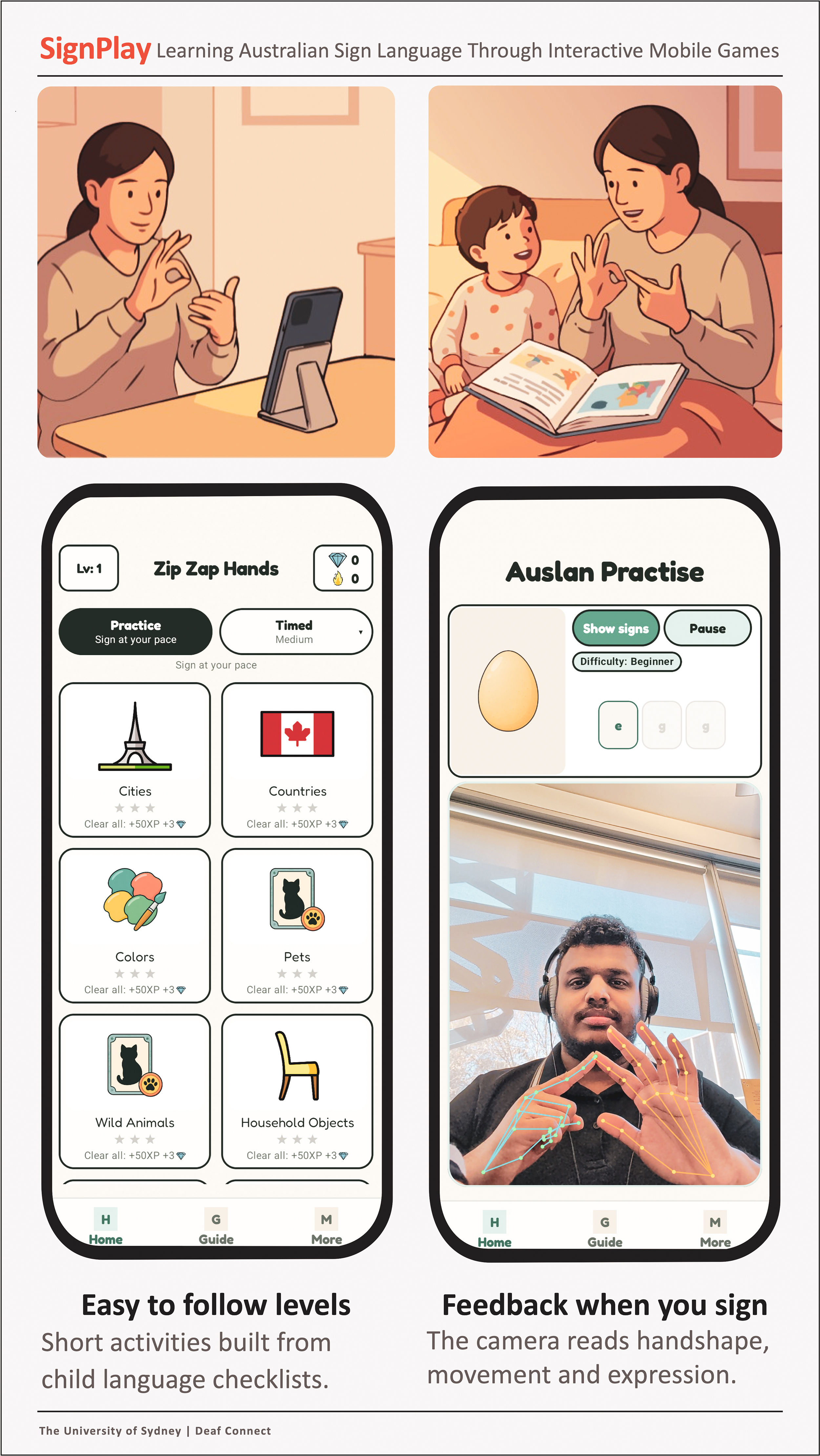
An infographic for "SignPlay". The top section pairs illustrations of a mother practising signs on her device and her reading a bedtime story to her child using signs. The bottom section aligns the smartphone screens side by side: the categorised level menu for "Zip Zap Hands" on the left and the "Auslan Practice" screen on the right, which shows live structural hand-tracking feedback.
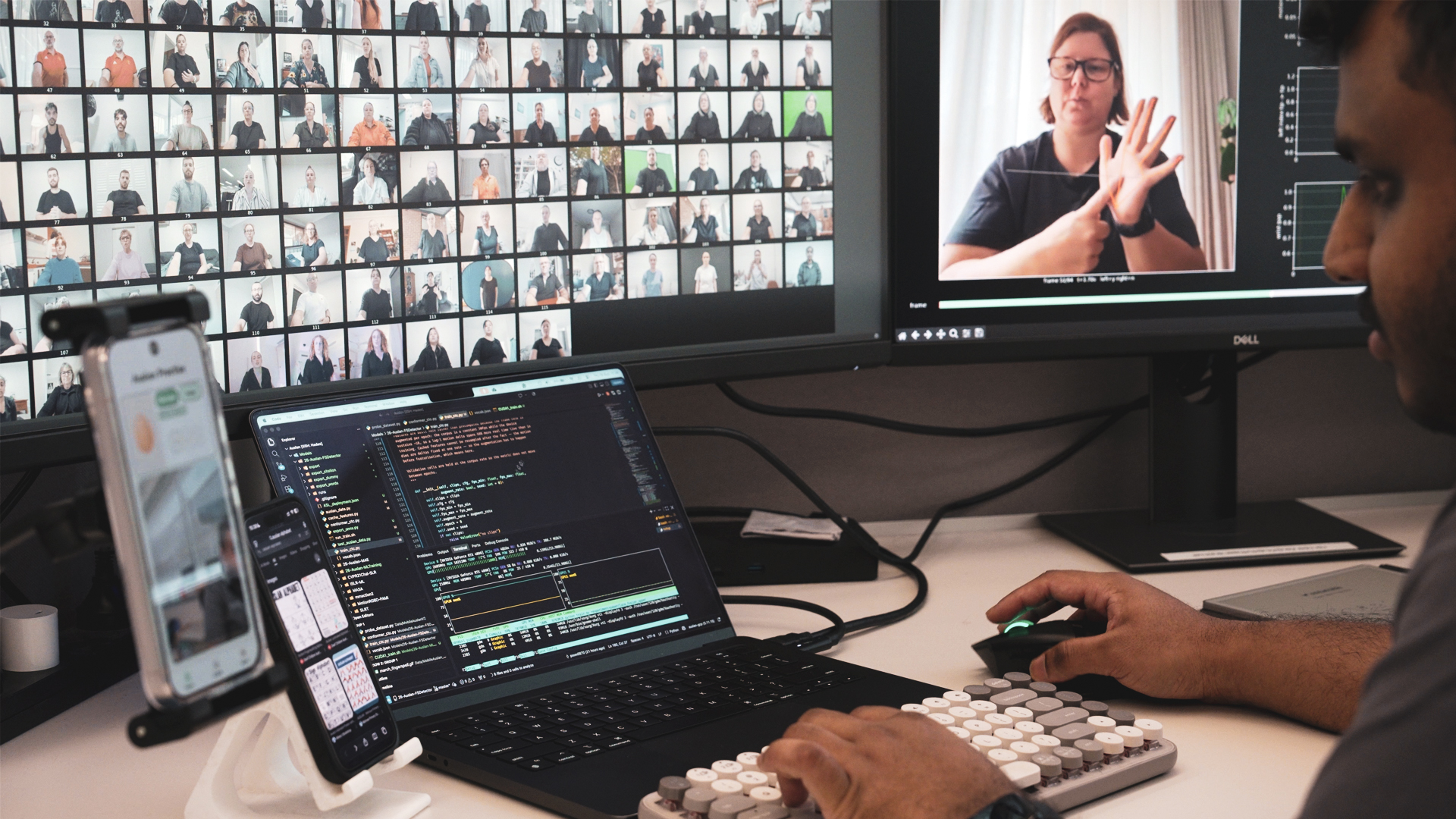
A member of the SignPlay team reviews the AI-powered sign recognition system alongside the Auslan training dataset. The technology is powered by the largest real-world Auslan dataset collected to date, enabling users to receive immediate feedback on their signing through a standard smartphone. Photo credit: The University of Sydney
Deaf Connect is proud to support the SignPlay project as a community collaborator.
As Chief Services Officer at Deaf Connect, I am proud to support the University of Sydney’s nominatiion of the SignPlay project for the Shaping Australia Awards.
Deaf Connect supports around 30,000 Deaf, deafblind, and hard-of-hearing Australians, and works closely with hearing parents of deaf children during the critical period following diagnosis. We know that early access to language is essential for a child's development, yet demand for Auslan learning consistently exceeds available capacity. Currently, families can face wait times of up to three months
to access a course place, with 159 families enrolled and a further 115 waiting. Those living outside major cities often experience the longest delays.
Deaf Connect joined the SignPlay project because it addresses a significant and longstanding challenge. Existing Auslan datasets were created primarily in studio environments and lacked the everyday, real-world signing examples needed to train technology capable of recognising Auslan and providing meaningful feedback to learners. Through our role as a community partner, we helped collect Auslan vocabulary data and provided ongoing guidance to ensure the technology reflects the real experiences and needs of Deaf communities and families.
What makes SignPlay particularly impactful is its potential to put accessible Auslan practice directly into the hands of parents. Rather than waiting months to access formal learning opportunities, families will be able to practise at home, build confidence, and strengthen communication with their children during a critical stage of language development.
SignPlay demonstrates the power of collaboration between researchers, technology innovators, and the Deaf community. It is a practical, scalable solution with the potential to improve outcomes for families across Australia, especially those who cannot afford to wait. Deaf Connect is proud to have contributed to this important work and strongly supports its recognition through the Shaping Australia
Awards.
Brent Phillips - Chief Services Officer
Sign language is one of my mother languages. I can call both sign language and written language my mother languages because I grew up in an environment where my family and I could communicate using sign language. I never had issues communicating with my parents and younger sister. This also led me to acquire written language skills in reading and writing, presentation skills, narrative skills, and communication skills, while understanding emotions. Eventually, I was also able to acquire a second language, English, without issues because of this. English allowed me to explore more opportunities by coming to Australia. Every Deaf kid should feel safe and secure when communicating with their parents and be able to explore more opportunities. Home should be a place where you feel comfortable and can talk about whatever you want. Nowadays, it is common for people to use smartphones, which can provide families with an opportunity to become familiar with sign language alongside their Deaf children together through SignPlay.
Yuka Maruyama - A deaf research student - currently at UNSW
SignPlay: helping families learn Auslan when everyday counts | The University of Sydney
Stay informed
Receive the latest updates about the Shaping Australia Awards program.