

Students diving deep into Australia's ocean future
University
Awards category


share

Protecting Australia's oceans will require a new generation of innovators willing to look beyond traditional horizons.
The University of Western Australia's Ocean Innovation minor brings together students from diverse disciplines to help solve some of the biggest challenges facing our oceans.
Students don't learn within disciplinary silos. They work across science, engineering, business, humanities and policy to tackle real-world ocean challenges alongside researchers, government agencies, environmental organisations and industry innovators. Together, they explore solutions ranging from marine conservation and sustainable seafood production to offshore renewable energy and emerging Blue Economy industries.
The program has grown rapidly, from just 15 students in 2022 to more than 220 in 2025, with women making up around 75 per cent of participants.
By helping students turn ocean challenges into practical solutions, the program is developing the people who will help shape Australia's Blue Economy and protect our oceans for generations to come.
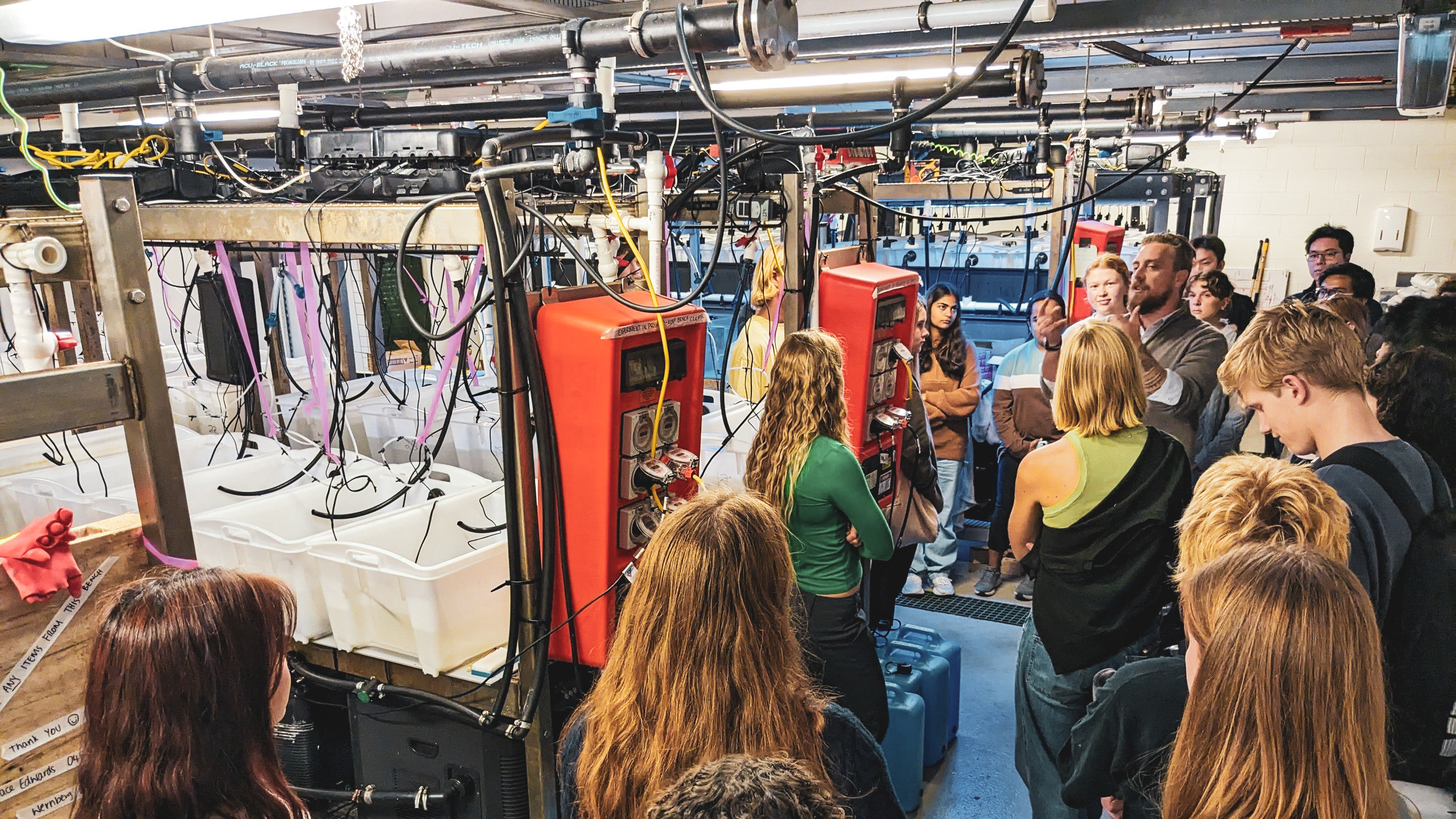
Ocean Innovation Minor students engaging with the founder of OceanHex to explore how innovative nature-tech can transform conventional coastal infrastructure into living, regenerative assets through ecological enhancement, autonomous monitoring and data-driven decision-making. Names: UWA Ocean Innovation Minor students Photo credit: Dr Arnold van Rooijen
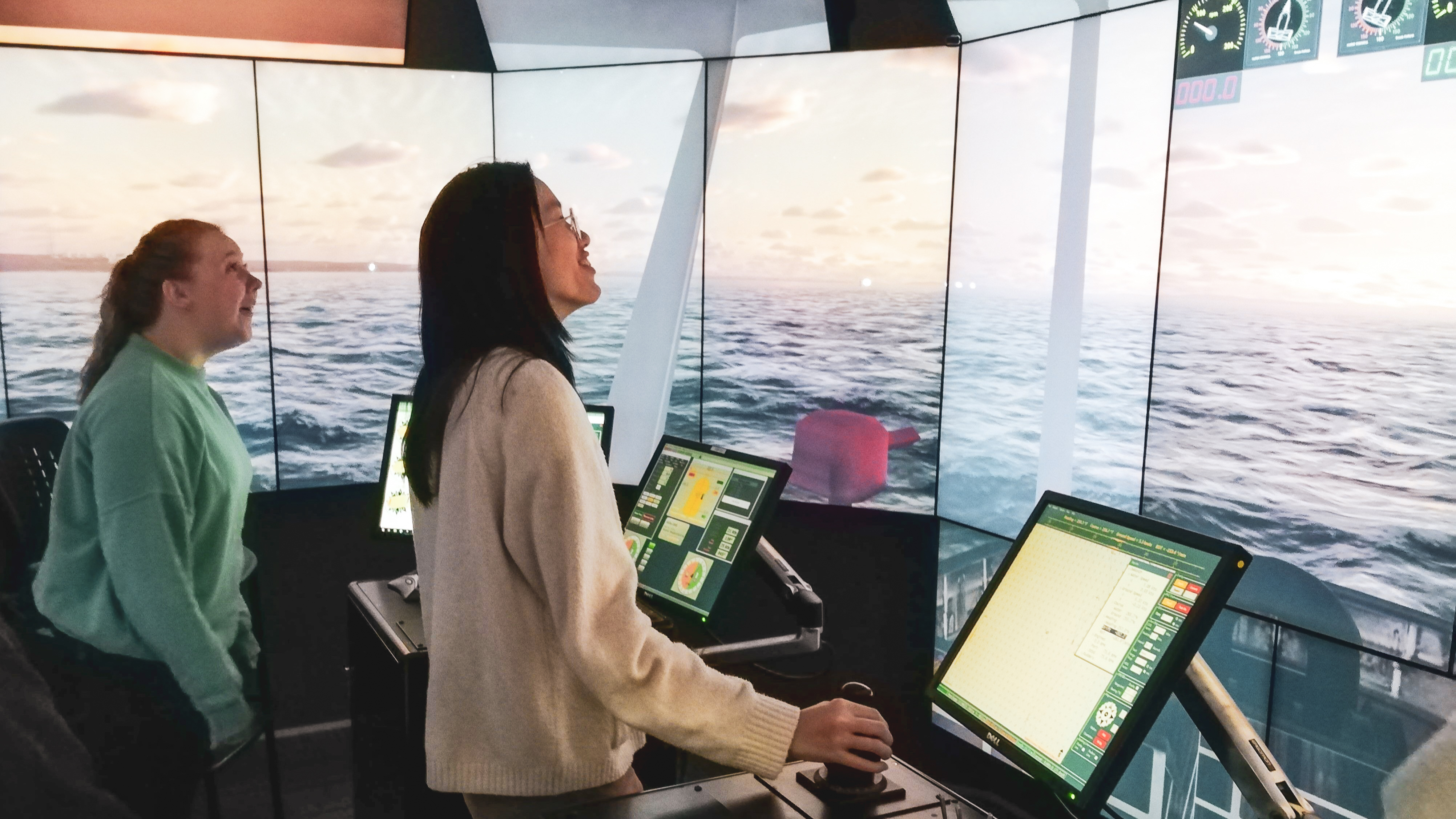
Ocean Innovation Minor students experiencing a state-of-the-art ship simulator and exploring how advanced simulation supports pilot training and port design, while discovering innovation and career pathways in ocean engineering. Names: Emma Louer, Olivia Randing Photo credit: Dr Jana Orszaghova

Ocean Innovation Minor students exchanging ideas and perspectives as they tackle real-world ocean challenges through collaborative learning. Names: Tomine Asting, Erin Griffin, Amelie Russell, Chloe Climie Photo credit: Jarryd Gardner
Ocean Innovation Minor students exploring the role of mangrove forests in coastal protection through hands-on experiments in UWA’s Coastal and Offshore Research Laboratory, connecting fundamental science with nature-based solutions to real-world coastal challenges. Names: Dr Diana Vargas Ortega, Dr Jana Orszaghova, Alex Donovan, Olivia Randing, Brooke Attwood, Jesadin Ralph, Candice Peters, Tahlia Kensitt, Nicolas Bassi. Photo credit: Dr Alex Atkinson
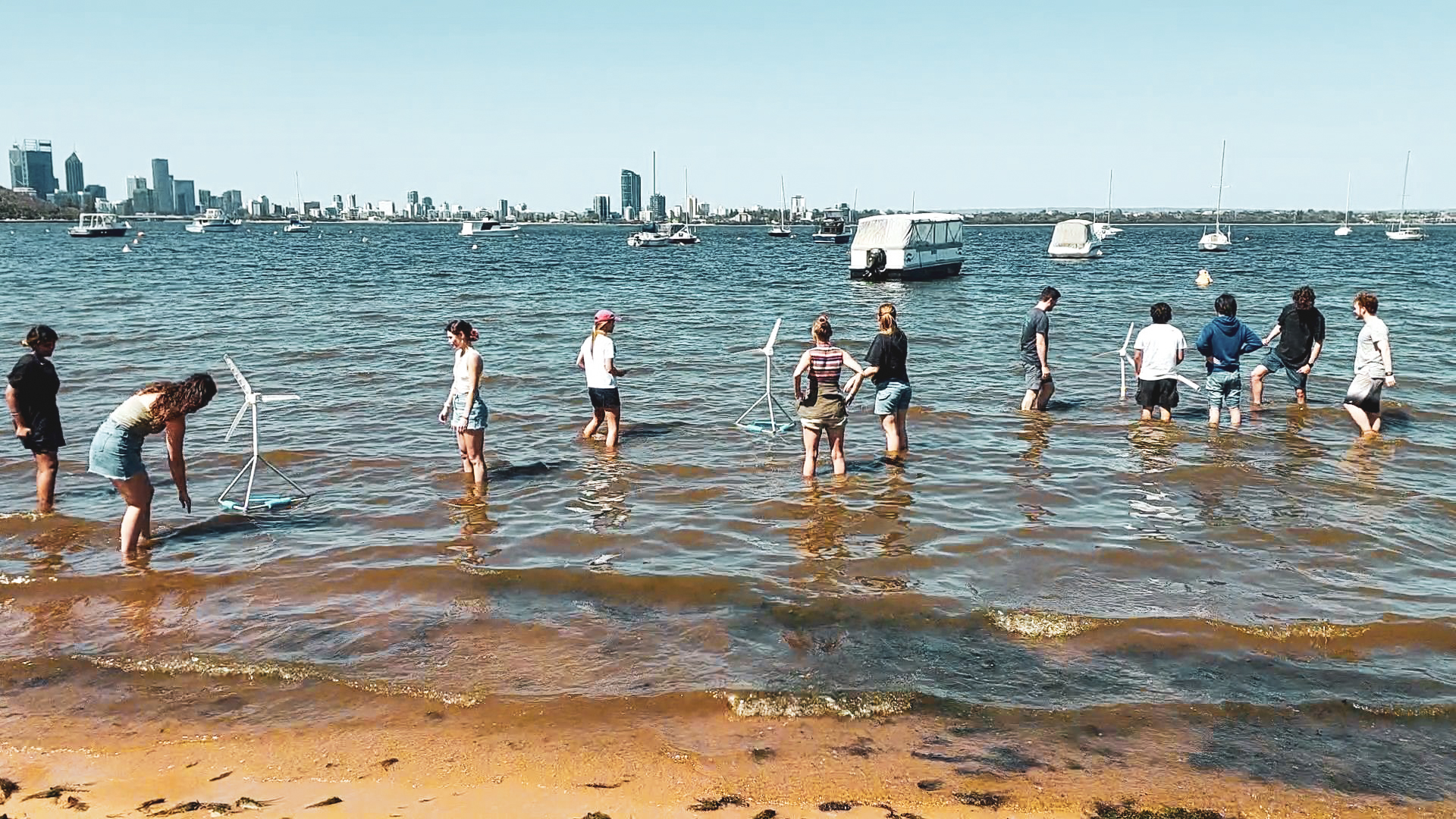
Ocean Innovation Minor students building and deploying model offshore wind turbines while exchanging ideas with local wind energy developers, connecting hands-on experimentation with real-world industry expertise. Names: UWA Ocean Innovation Minor students Photo credit: Prof Britta Bienen
My name is Jesadin Ralph. I completed a Bachelor of Science, majoring in Mechanical Engineering, at UWA, and am currently studying a Master of Professional Engineering. During my undergraduate degree, I heard about a new minor being introduced, the Ocean Innovation Minor. What drew me to it was UWA’s international reputation in ocean research. Beyond teaching me material relevant to my major, the minor strengthened my interpersonal and leadership skills through collaborative and engaging activities with students from all over the world.
The minor comprised of four units, each offering something different. Global Ocean Challenges stood out for its multi-modal assignments, culminating in a documentary which I animated, filmed, and edited. Energy from Oceans pushed me outside my comfort zone, sharpening my critical thinking through activities involving the whole class. The Changing Oceans, the unit furthest from my major, broadened my knowledge through fun and engaging activities that brought a different dimension to my learning. My favourite was Ocean Engineering Solutions, where each lecture was led by a different industry speaker, covering the
design, construction and operation of offshore energy and engineering ocean solutions. It let me draw on everything I had learned throughout the minor to lead a group through a complex assessment involving the design of wave energy converters.
This minor gave me a new appreciation for the power the ocean holds and strengthened my design skills that are critical to my work as a mechanical engineer. It also gave me a different outlook to most of my peers, particularly in engineering solutions involving wind and waves.
The influence has stayed with me, it led me to choose Renewable Ocean Energy as an elective in my masters, where I was awarded the Aurora Offshore Engineering Prize for achieving the highest mark.
Jesadin Ralph - Student, Master of Professional Engineering, University of Western Australia
As an Earth Science graduate, I found the Ocean Innovation Minor to be an invaluable complement to my degree. While many of my core units focused on technical theory, the minor helped bridge the gap between knowledge and application by exploring practical solutions to complex challenges. What set this program apart was its innovative approach to teaching, combining traditional learning with field experiences, industry engagement, creative assessments and interdisciplinary collaboration.
The minor encouraged me to think beyond the classroom and consider how ocean science, technology, policy and innovation can be applied in practice. Experiences such as snorkelling at C.Y. O'Connor Reef, practical workshops, site visits and discussions with industry professionals brought the content to life and demonstrated the impact ocean innovation can have on society and the environment.
A key theme across the minor was the emphasis on discussion and debate. Students came from a range of disciplines, including engineering, environmental science and geology, creating a learning environment where diverse perspectives were welcomed.
Every class provided opportunities to share ideas, challenge viewpoints and better understand the trade-offs involved in addressing ocean-related challenges. These interactions broadened my perspective and reinforced the importance of collaboration in developing innovative solutions.
The minor motivated students to make a positive impact while developing career-ready skills. Through assessments including pitches, briefing notes, data analysis and collaborative projects, I strengthened my science communication, critical thinking and teamwork skills.
I now work in the energy sector, and I believe the Ocean Innovation Minor played an important role in shaping my career journey. The program challenged me to think beyond the scientific concepts taught in my degree and consider how innovation, collaboration and stakeholder engagement can be used to address complex environmental challenges. Looking back, it was one of the most engaging and impactful parts of my university experience.
Thea Rooplal - Graduate Officer at the WA Department of Water and Environmental Regulation, Bachelor in Earth Science (Major in Integrated Earth and Marine Sciences), graduated December 2025
I am delighted to support the Ocean Innovation minor teaching team’s nomination for the Future Builder Award. My experience of the minor has shown me what education can achieve when curiosity, purpose and genuine collaboration are placed at its center.
What makes this program so innovative is that it never treats ocean challenges as belonging to a single discipline. Across topics including pollution, climate change, coastal resilience, sustainable food and renewable energy, the lecturers connect marine science and engineering with law, policy, economics, planning and Indigenous perspectives. Workshops, field observations, case studies, collaborative projects, concept design and prototyping turn complex ideas into problems we can investigate and solutions we can test. We are not simply asked to remember what is known; we are encouraged to ask what could be done better.
The teaching team creates an unusually motivating environment. Their enthusiasm is infectious, but equally important is the trust they place in students to think ambitiously, question assumptions and contribute seriously. The minor has strengthened my research, critical thinking, communication and teamwork, while teaching me to weigh environmental, social, commercial and regulatory consequences together. It has made the Blue Economy feel not like an abstract concept, but a field in which I could build a meaningful career and help deliver practical change.
The program also bridges the university and the world beyond it. Learning from guest speakers across industry, government, NGOs and research, and seeing specialist facilities and active ocean projects, showed me how ideas move from evidence to design, testing, regulation and implementation. These encounters revealed both the range of careers available and the value of communicating across professional boundaries.
The Ocean Innovation minor has expanded not only my knowledge, but my sense of responsibility and possibility. I wholeheartedly recommend this exceptional teaching team for this prestigious national recognition.
Kunhan Lyu - Bachelor of Science student (Major in Computer Science)School of Physics, Mathematics and Computing
Students diving deep into Australia's ocean future | The University of Western Australia
"This sounds like a great way to test blood glucose levels, particularly for people at work or even children at school where printers may be more readily available. I’ll be one of the first in line for it. I'm yet to hear of someone who enjoys pricking their fingers to check their levels.”
Duncan Reid
Diabetes NSW Ambassador
Stay informed
Receive the latest updates about the Shaping Australia Awards program.